Architecture as a field is larger than the canon that claims to define it. Through spatial practices that engage buildings and the worlds that surround, extend and reshape them, we address the disciplinary transformation and expansion architecture is going through today.

We pursue alternatives towards responsibility and solidarity in the ways we design, build and inhabit our buildings, cities, towns and villages, enabled by media.
Sliver Presentation

Studio Space Popular works at the intersection of the built and the virtual environments. We imagine alternatives towards responsibility and solidarity in the ways we design, build and inhabit our buildings, cities, towns and villages, enabled by media.

Transmedia Prototype

Studio Space Popular approaches architecture as a transmedia practice, studying how spatial knowledge emerges from both mediated and built environments.

Through this lens students imagine counter-models to current socio-political systems supported by architectural practice: from how distributed communities and diasporic cultures shape the infrastructures of collective life, to new forms of ownership, governance, gathering and belonging.

Studio briefs are organised under four key themes: virtual craft, spatial data libraries, transmedia gatherings, and virtual civic infrastructure, introducing a variety of tools that bridge the digital and analog in architecture. The studio alternates yearly between practical and speculative practice.

 
The studio engages students across the 6 semesters of their Master studies. On semesters 1 to 4 students follow a brief that sets both a topic and a methodology. Studio briefs are organised under four key themes: virtual craft, spatial data libraries, transmedia gatherings, and virtual civic infrastructure, introducing a variety of tools that bridge the digital and analog in architecture. The studio alternates yearly between practical and speculative practice. Semesters dedicated to practical work involve experimental research, local community engagement, and the prototyping of design projects, while semesters dedicated to speculative work involve historical and descriptive research, disciplinary community engagement, and speculative design projects.

In semesters 5 and 6, students work on their thesis: an independently chosen topic carried out with the support of the studio team as well as other professors from the institute. Thesis deliverables are project-specific, though in semester 5 students are also asked to submit a research book which becomes part of the studio library for future students to consult and build upon.

STUDIO BRIEFS:
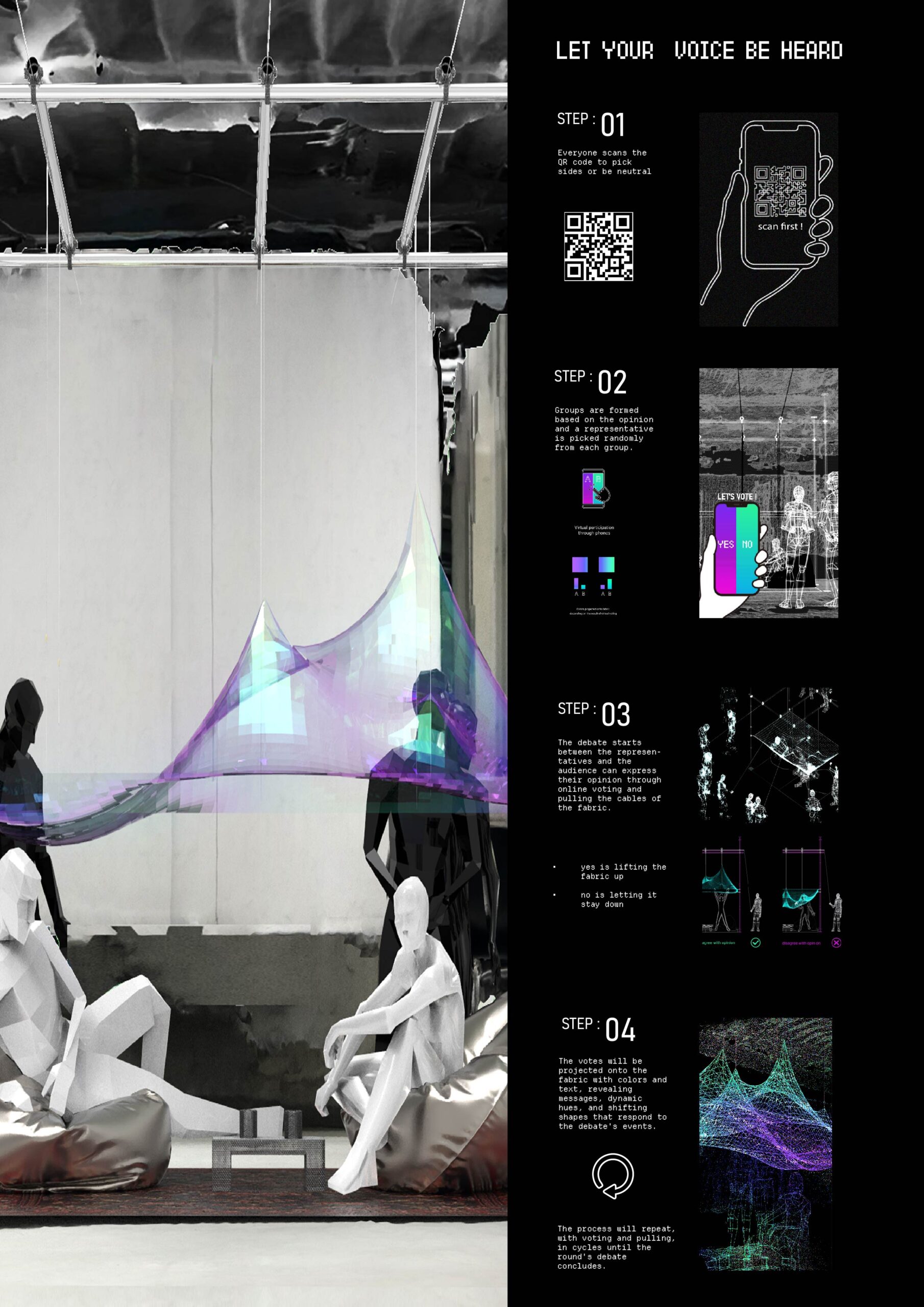
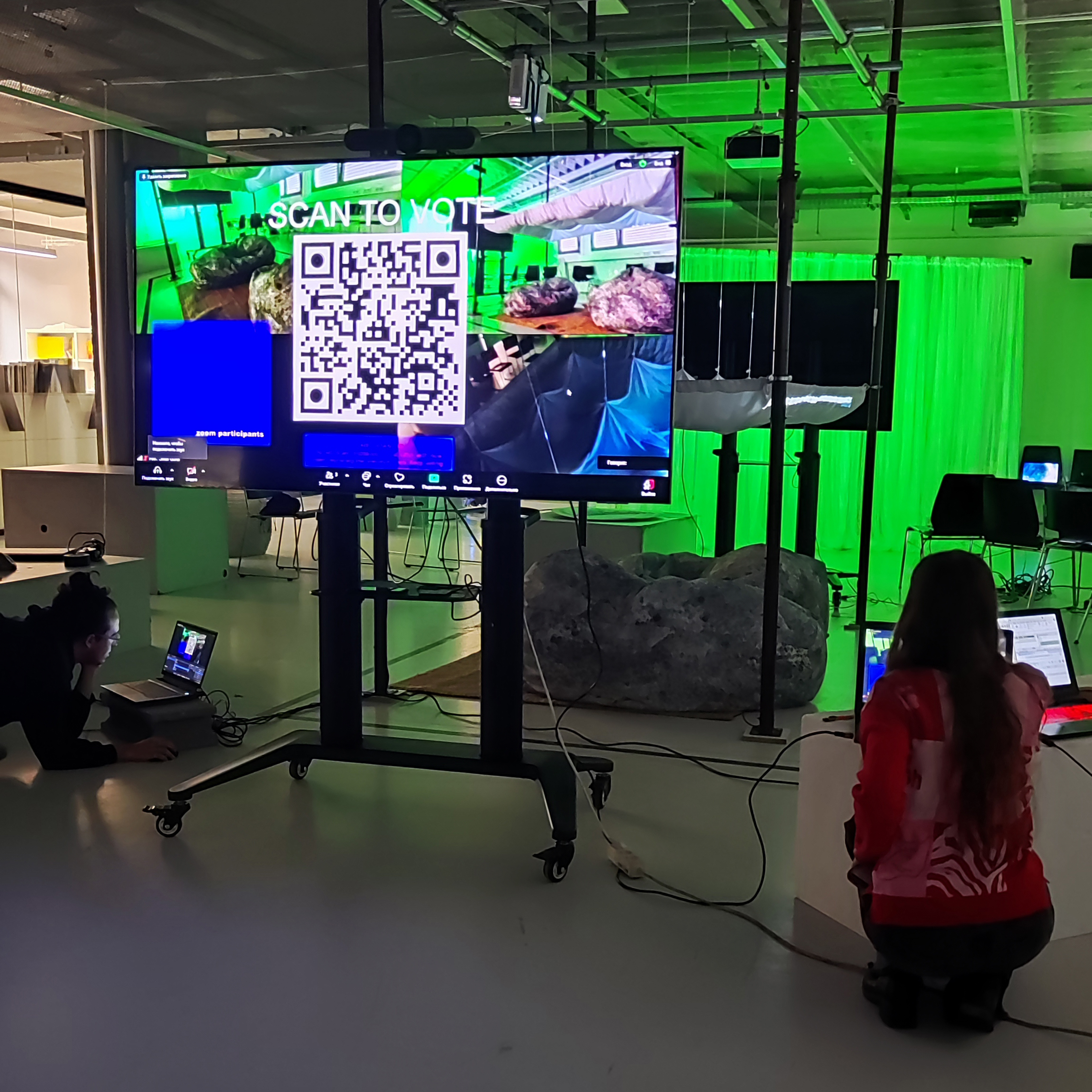
Transmedia Debate Chamber // Winter Term 24-25

"This studio worked on a civic transmedia debate chamber - a hybrid spatial platform for gatherings of representatives that could benefit from spaces and infrastructures for remote connection and alternative forms of presence."

The After Mall // Summer Term 25

"This studio worked with the transforming spaces of commerce in the city of Vienna, proposing adaptive reuse strategies that take into consideration the impact that e-commerce (media) is and will continue to have on them."

WORLDCRAFT // Winter Term 25-26

"Architecture operates within the realm of aesthetics. If the pattern book was the medium through which 19th-century aesthetic fantasies circulated, today it is the Asset Library."

THE TELE - PROVINCE // Summer Term 26

"It is between tele-mediated topological reorganisation and topographic realities, and between aspirations to escape metropolitan speculation and the likelihood of reproducing its logics, that The Tele- Province places its inquiry."

Transmedia Concept

Lara Lesmes and Fredrik Hellberg lead the practice Space Popular; an architectural studio that explores the relationships between media and the built environment through research, design and artworks.

The studio has realized buildings, exhibitions, public artworks, furniture collections, and interiors in Asia and Europe, as well as virtual architecture for the immersive web.

Lesmes and Hellberg have previously held academic positions at UCLA AUD in Los Angeles, the Architectural Association in London, the University of Toronto, and INDA Chulalongkorn University in Bangkok. Clients, collaborators and commissioners include national institutions such as MAK — Museum of Applied Arts, Vienna, Austria, MAXXI — National Museum of 21st Century Art, Rome, Italy, the Swedish Center for Architecture and Design ArkDes, Stockholm, Sweden, the Royal Institute of British Architects, London, UK, the National Museum of Modern and Contemporary Art, Seoul, South Korea, as well as independent galleries such as MAGAZIN, Vienna, Austria, and Sto Workshop, London, UK.

Space Popular portrait
v

Contact

s
3 open

Admission